# How Can An AI Search Visibility Tracker For SaaS Companies Improve Search Performance Monitoring?
[](https://digitalmarketingbuddy.io/pricing)
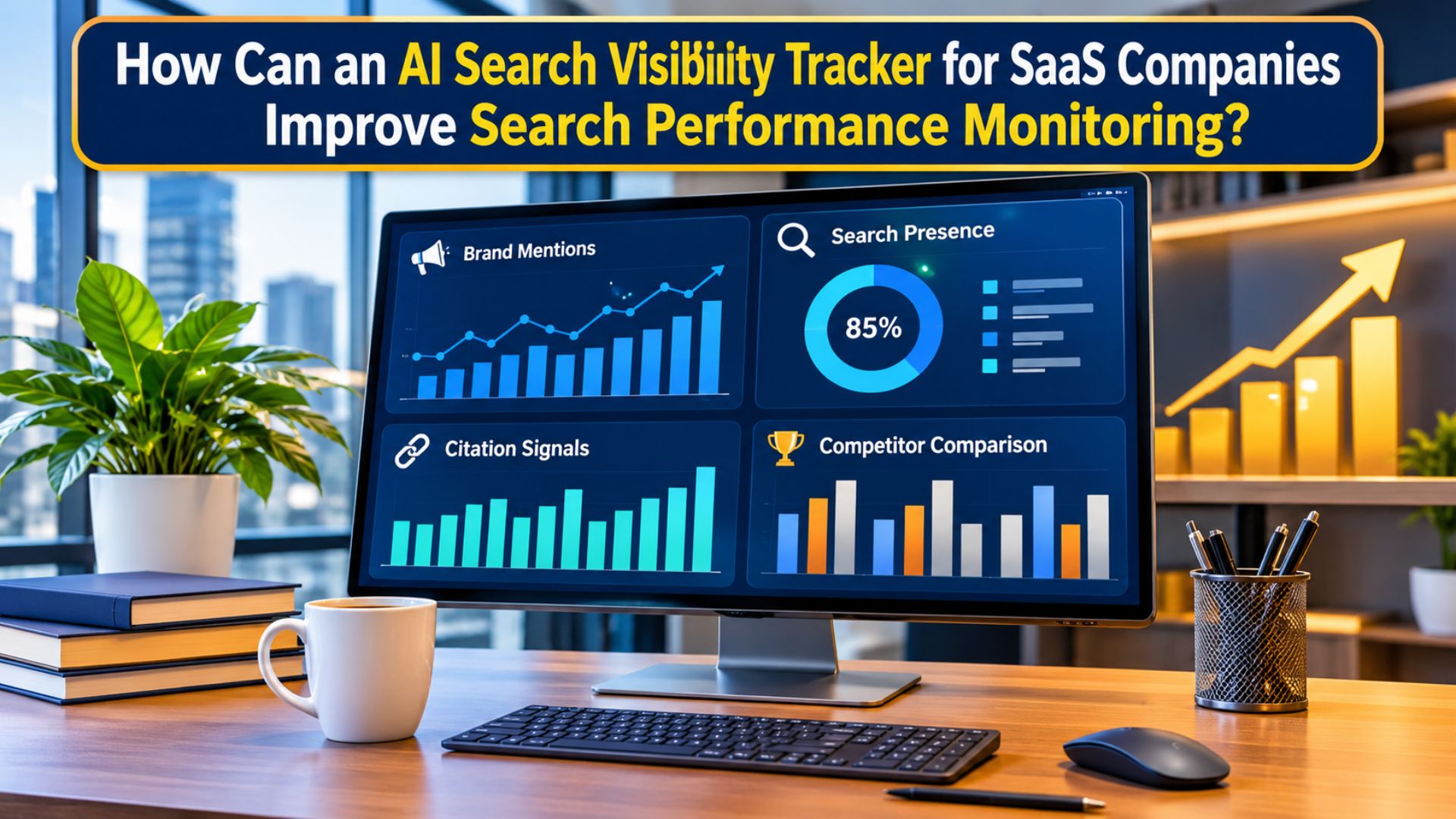
SaaS buyers use search engines and AI-powered answer platforms to research software. Ranking reports alone cannot show whether a brand appears when prospects ask questions, compare platforms, or seek recommendations. An ***[AI search visibility tracker for SaaS companies](https://blog.digitalmarketingbuddy.io/llm-and-ai-search-visibility-tracking-2026-saas-guide/)*** helps marketing teams monitor brand mentions, citations, rankings, and competitor presence in search. It turns scattered observations into measurable signals for better content decisions.
# Monitor Brand Presence Across AI Search Experiences
Traditional SEO tools mainly measure keyword positions, organic traffic, and backlinks. AI search monitoring adds another layer by examining whether a brand appears in generated answers, which sources are cited, and how often competitors are mentioned in similar responses. A SaaS company may rank well yet remain absent from an AI recommendation. A tracker can monitor a selected group of prompts that reflect real customer questions. These might include requests for project management software, comparisons between CRM platforms, or questions about a specific business challenge. Repeated checks reveal visibility changes across topics. Teams should organize prompts by product category, audience, buying stage, and search intent. This makes the results easier to interpret and helps distinguish awareness queries from high-intent comparisons. Monitoring creates a baseline for evaluating content updates.
# Understand Competitor Mentions and Citation Sources
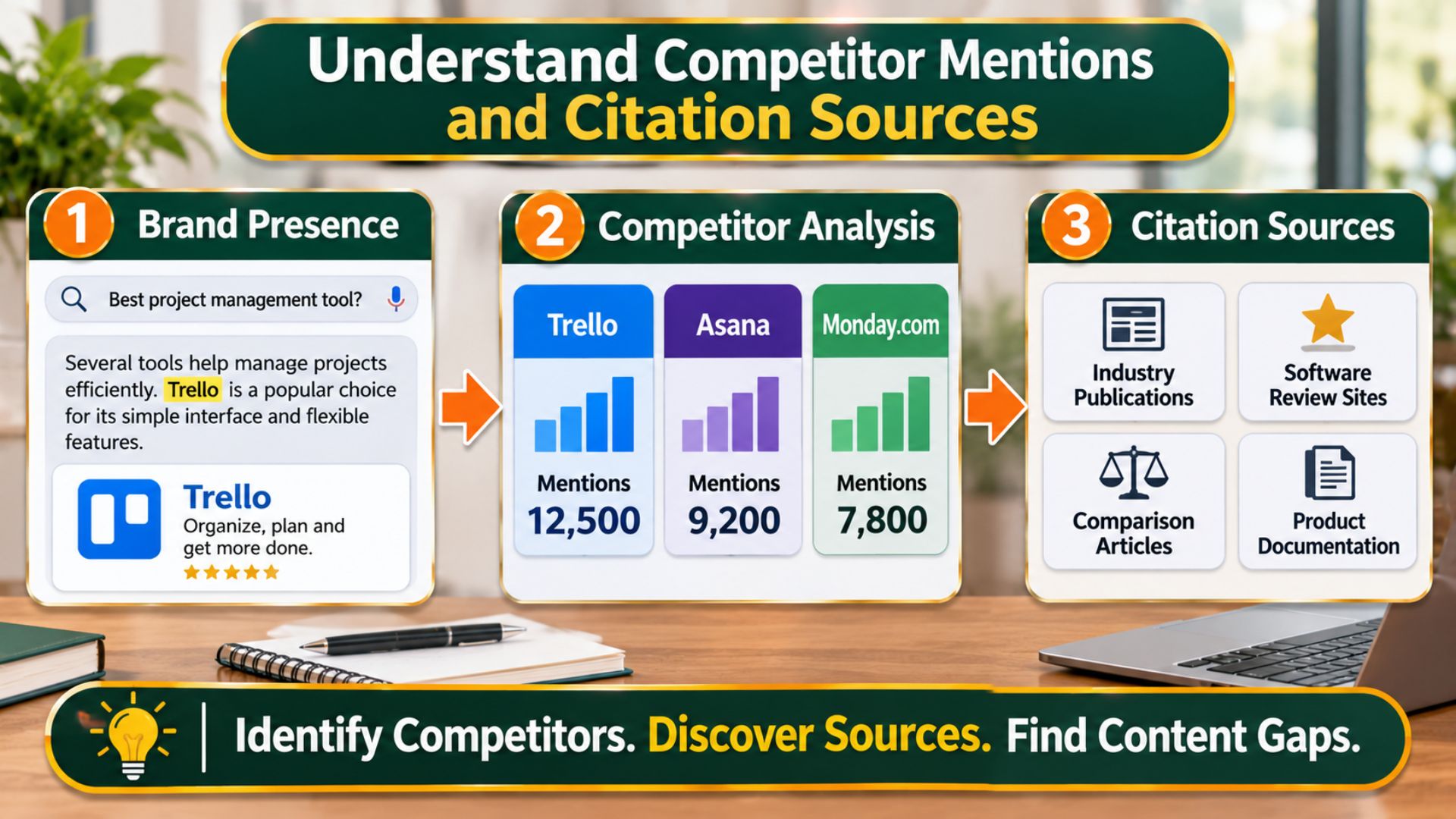
Visibility is relative. SaaS marketers need to know not only whether their company appears, but also which competing products receive attention in the same answers. A useful tracker identifies recurring competitor mentions, the context in which they appear, and the websites or publications that AI systems cite.
[](https://digitalmarketingbuddy.io/pricing)
Citation analysis can reveal content gaps. If several competitors are referenced through integration guides, comparison pages, review platforms, or detailed tutorials, those sources may indicate what information is useful to buyers. Marketers can assess those pages and create more complete resources. Findings can guide digital PR, expert commentary, original research, and product education. For example, repeated citations from trusted industry publications may suggest opportunities for expert commentary or product education. Treat citation patterns as clues, not guaranteed ranking factors, because responses vary by prompt and platform.
# Turn Visibility Insights into Better Content Priorities
Tracking matters when teams use findings to improve content. If a product is missing from answers about a use case, marketers can check whether the website explains it clearly and answers common objections. Product details, pricing, integrations, and documentation should also be easy to find. An ***[AI SEO content writer for ecommerce](https://blog.digitalmarketingbuddy.io/ai-content-writing-and-publishing-2026-ecommerce-guide/)*** may support a different business model, but its approach to structured product information, search intent, and useful descriptions can offer ideas for SaaS content teams. SaaS teams should adapt those principles to software evaluation, implementation concerns, and customer outcomes. A tracker can help prioritize updates by showing topics with low brand presence, competitors with stronger coverage, and citations that repeatedly appear. Teams can then create comparison pages, solution guides, FAQs, tutorials, or customer stories that address information needs. Review every update for accuracy and usefulness.
# Measure Progress and Connect Insights to Business Goals
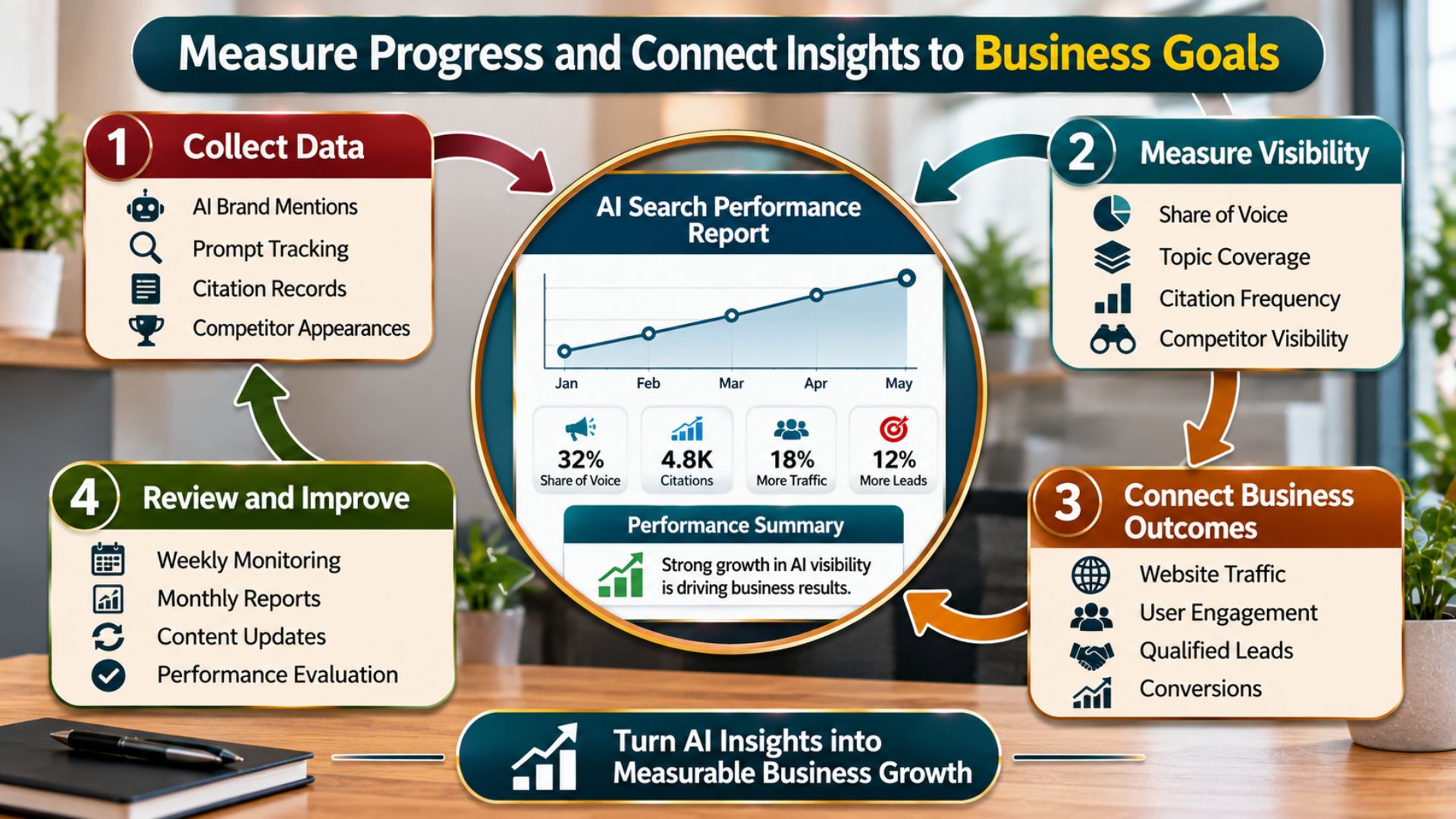
A reliable monitoring process needs meaningful metrics. Teams may track brand mention frequency, share of voice within a defined prompt set, citation sources, competitor visibility, and changes across topics. They should also record the date, platform, prompt wording, and relevant settings because AI answers are not always identical between checks.
[](https://digitalmarketingbuddy.io/pricing)
Review these measures alongside analytics and conversions; more mentions do not automatically mean more revenue. Check whether relevant pages attract visitors and support conversions. Create a reporting cycle with clear owners and actions. A weekly review can flag sudden changes, while a monthly analysis can identify trends and content opportunities. Record major updates and campaigns to compare results over time.
# Conclusion
SaaS search performance now depends on being discoverable across both conventional search results and AI-generated answers. Monitoring brand mentions, competitor presence, citation sources, and topic coverage gives marketing teams a more complete understanding of how buyers encounter their products. An ***[AI search visibility tracker for SaaS companies](https://blog.digitalmarketingbuddy.io/llm-and-ai-search-visibility-tracking-2026-saas-guide/)*** can bring these signals into one repeatable process, helping teams identify gaps, prioritize useful content, and evaluate progress against business goals. The strongest results come from combining consistent measurement with accurate product information, helpful resources, and regular review. Visibility data should guide decisions, while customer needs remain the standard for every improvement.
# FAQs
**1. What is an AI search visibility tracker for SaaS companies?**
It is a monitoring tool that checks how often a SaaS brand appears in AI-generated answers, citations, and relevant search experiences.
**2. How does AI search visibility monitoring differ from traditional SEO tracking?**
Traditional SEO tracking focuses on rankings, traffic, and backlinks. AI visibility monitoring also examines brand mentions, citations, and competitor appearances in AI-generated responses.
**3. Which metrics should SaaS companies track for AI search visibility?**
Useful metrics include brand mention frequency, share of voice, citation sources, competitor visibility, and topic-level presence across a consistent set of prompts.